Most people walk through a museum the way they scroll a feed: quickly, guiltily, pausing only for the famous ones. The average visitor spends about seventeen seconds in front of any given work — long enough to read the label, not long enough to see the painting. This is a shame, because looking is a skill, and like most skills it can be learned in an afternoon.
Start with the first ten seconds, and do nothing. Do not read the label. Do not name the style. Just let the painting hit you — is it loud or quiet, warm or cold, still or moving? This first impression is data. It is the painting doing its job before your intellect gets in the way. Trust it, and remember it.
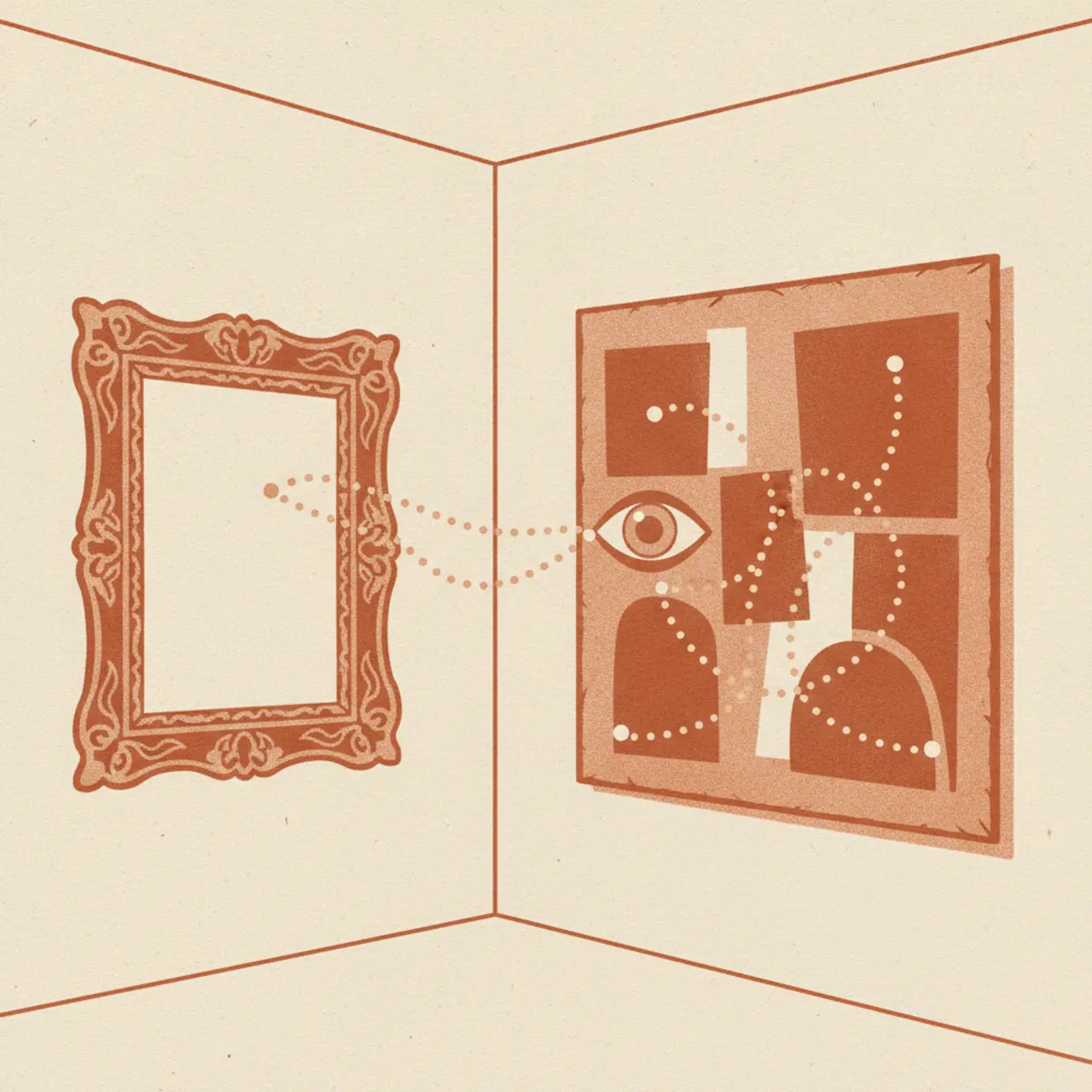
Now, spend thirty seconds on structure. Where does your eye go first, and where does it travel next? Painters compose the way directors block a scene — nothing is accidental. Find the brightest point, the sharpest edge, the one figure looking out at you. These are the levers the artist is pulling. The composition is a set of instructions for your attention; learn to feel yourself being instructed.
The next thirty seconds are for the hand. Step close — closer than feels polite — and look at how the paint was actually put down. Is it thin and smooth, or thick enough to cast shadows? Fast or slow? A Rembrandt up close is a riot of loose, confident strokes that only resolve into a face at a distance. The brushwork tells you the temperature of the artist's attention.
Save the last ten seconds for the label, and treat it as a footnote, not a verdict. By now you have your own reading; the label just tells you whether you and the artist were in the same room. Sometimes you will be wrong, and that is the fun of it. But you will have looked — really looked — which is more than most people in the gallery can say.
The method scales. It works on a masterpiece and on a mural you pass on the way to lunch. The point is not to be right about art. The point is to be present in front of it, which is the only way art has ever worked.
◆