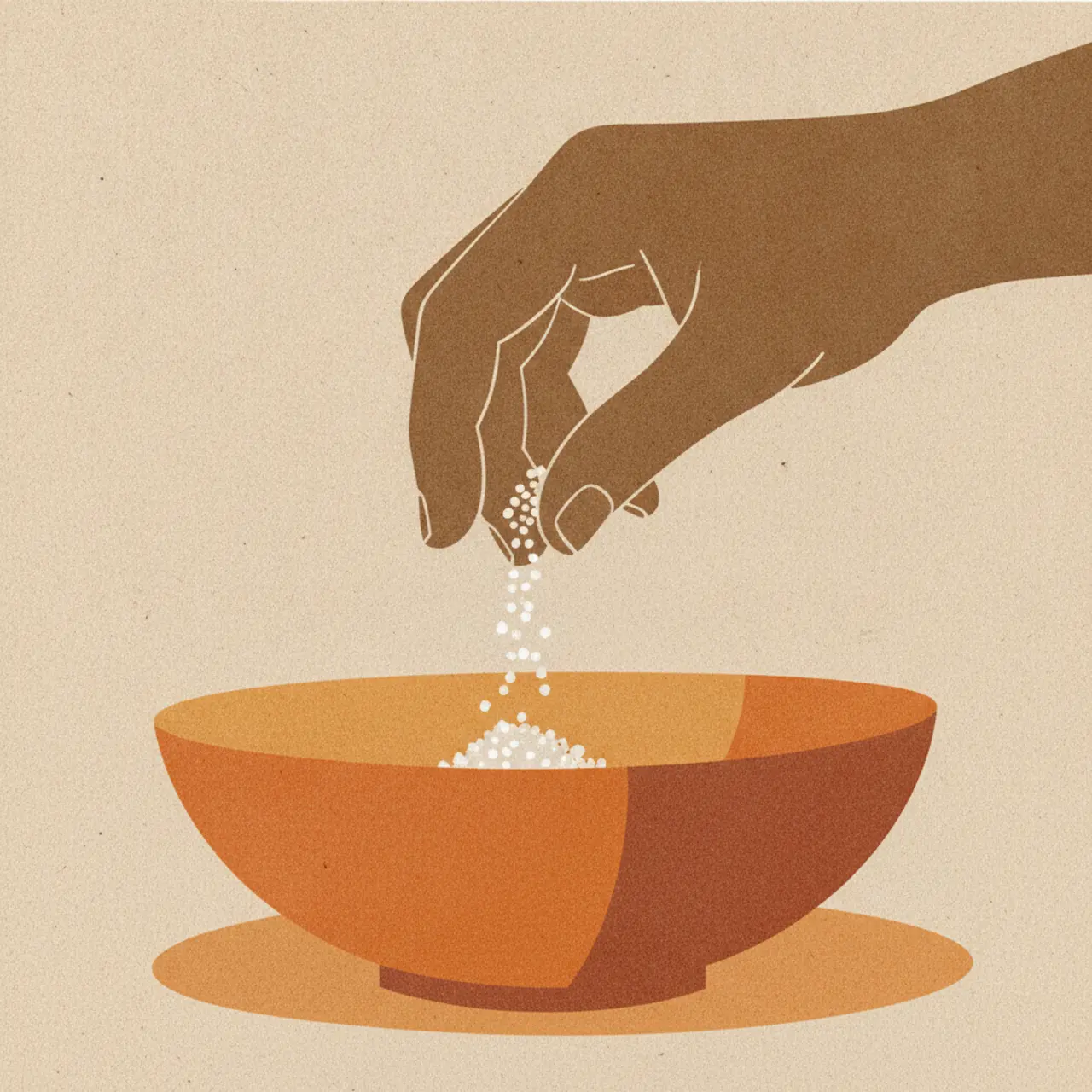
If I could teach a home cook exactly one thing, it would not be knife skills or how to build a sauce. It would be this: you are almost certainly under-salting your food, and you are salting it at the wrong time. These two errors, corrected, will do more for your cooking than any new gadget or recipe ever could.
Salt is not merely a flavor. It is a flavor amplifier — it suppresses bitterness, heightens sweetness, and pulls the volume up on everything else in the dish. A properly salted soup does not taste salty; it tastes more like itself. The reason restaurant food so often tastes better than yours is rarely a secret ingredient. It is that a professional kitchen salts fearlessly, in layers, and tastes constantly.
Timing is the second half. Salt added early — to the water, to the meat, to the onions as they sweat — has time to penetrate and to do its chemical work, drawing out moisture and deepening flavor. Salt added only at the end sits on the surface and reads as a sharp, one-note hit. Season as you go, not as you serve. Every stage is a chance to build.
Fat plays the same amplifying role from the other direction. It carries flavor compounds that water cannot, coats the tongue, and gives food the roundness we describe, vaguely, as richness. A vegetable dish that tastes thin is often not under-cooked but under-fatted. A finishing drizzle of good oil does what salt does: it makes the dish taste fully like the thing it is trying to be.
None of this is a license for excess. The goal is not salty, greasy food. The goal is food seasoned to the exact edge where it tastes most like itself and no further — and finding that edge requires tasting, adjusting, and above all the nerve to add more when more is what the dish is quietly asking for. Trust the pinch. Then taste, and trust the next one.
◆